

The “401(k) Tort Terror” Just Entered Healthcare. Big Consulting Firms Named as Defendants.
Published By Dave Chase
On December 23, 2025, the firm that revolutionized retirement plan oversight filed its first healthcare ERISA cases.
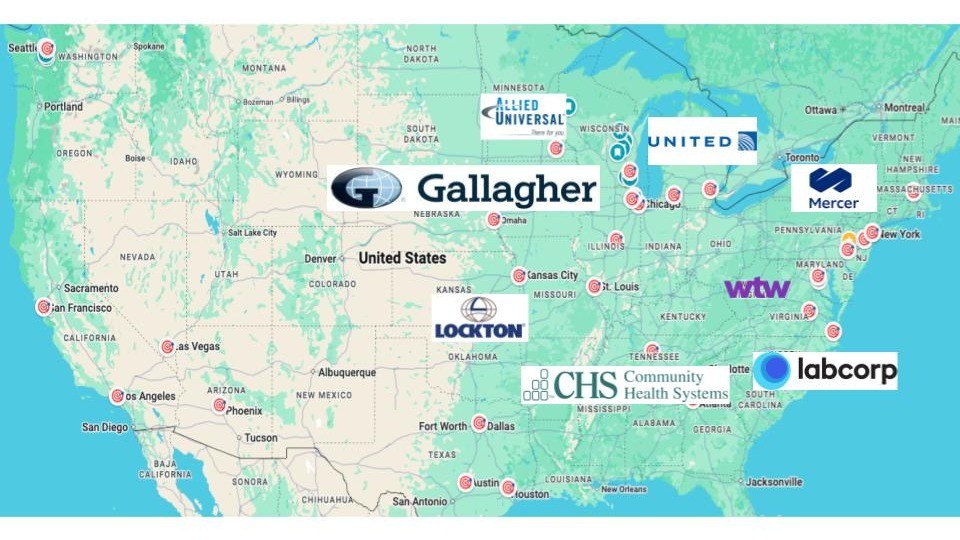
Schlichter Bogard LLC (the law firm with three unanimous U.S. Supreme Court victories, over $750 million in settlements, and an estimated $2.8 billion annual reduction in 401(k) fees) filed class actions against United Airlines, Laboratory Corp, CHS/Community Health Systems, and Universal Services of America over voluntary benefits programs.
But here’s what makes these cases a seismic event:
The lawsuits also directly name the benefits consulting firms as defendants
Gallagher, Mercer, Lockton, and Willis Towers Watson are not merely witnesses or service providers. They are named parties facing allegations of fiduciary breaches and prohibited transactions, with commissions reaching as high as 40% of premiums.
Julie Selesnick, one of the nation’s leading plaintiff-side ERISA attorneys who has spent 20+ years litigating against extractive industry practices, made a very clear statement:
“Big consulting firms should be very worried about this.”
She’s absolutely right. But let me explain why this goes beyond “worried” into existential threat territory.
Who Is Schlichter Bogard?
Industry publications call Jerry Schlichter the “401(k) tort terror” for aggressively targeting plan sponsors like Boeing ($57 million settlement), Lockheed Martin, Fidelity, Oracle ($12 million settlement), Columbia University ($13 million settlement), and Pentegra ($48.5 million after a $38.7 million jury verdict) over fiduciary breaches involving imprudent investments and high fees.
This approach sparked copycat firms pursuing similar cases, transforming retirement plan oversight nationwide. Major recordkeepers restructured their entire business models. Fee compression became industry standard. Fiduciary oversight went from optional to mandatory.
Schlichter Bogard achieved three unanimous U.S. Supreme Court victories:
- Tibble v. Edison (2015) – The first 401(k) excessive fee case to reach SCOTUS, mandating ongoing fiduciary monitoring
- Hughes v. Northwestern University (2022) – Affirming the duty to remove imprudent funds
- Cunningham v. Cornell University (2025) – Clarifying burden of proof in recordkeeping claims
These are precedents that reshaped an entire industry.
The Schlichter Litigation Model
If you listen to Jerry Schlichter in interviews, he’s very clear about his approach: He only pursues cases he’s willing to take all the way to the Supreme Court.
He wants legal precedent, not quick settlements (though substantial settlements inevitably follow).
This isn’t ambulance-chasing litigation. This is systematic transformation through precedent-setting legal action.
When Schlichter Bogard enters a market, it signals the beginning of fundamental structural change. The retirement plan industry learned this the hard way. The healthcare benefits consulting industry is about to learn the same lesson. Those who clung to old ways have mostly been left in the dustbin of history. Those who embraced the fiduciary path were massively successful while serving their clients in highly aligned compensation structures.
Why Healthcare, Why Now?
For nearly a decade, I’ve been warning that ERISA fiduciary risk in health plans represents “the largest undisclosed risk” facing organizations. That’s a direct quote from an EY Managing Director and Risk Management Practice leader who spoke at a payment integrity forum on February 2, 2017 I keynoted.
That quote became the title of Chapter 19 in my book, CEO’s Guide to Restoring the American Dream. The chapter detailed how two Big Four accounting firms were already refusing to sign off on certain audits without allowances for ERISA fiduciary risk.
That was eight years ago.
Since then, I’ve documented:
- Independent board directors quietly sounding alarms about personal liability that D&O insurance might not cover
- Entire benefits departments fired when boards realized the lack of proper management
- Attorneys cultivating dozens of cases against plan administrators and co-trustees
- Association of Corporate Counsel warning its 10s of thousands of corporate & general counsel members ERISA-Covered Companies Must Disclose Health Plan Costs (it was their #1 trending article for the full month following its publication). The article was written by veteran general and outside counsel, Jim Patton and Susan M. Nash.
The infrastructure for this enforcement wave has been building for years. The consulting industry assumed it would remain insulated from direct liability.
Schlichter Bogard’s entry into healthcare shatters that assumption with precision targeting.
When the Consolidated Appropriations Act of 2021 was signed into law on December 27, 2020 by the President, Health Rosetta’s co-founder and former securities attorney, Sean Schantzen, agreed it was a seismic event but stated it would take 5-10 years to feel the full effects. He was wrong…by 4 days.
Why These Cases Are Different
ERISA health plan litigation has historically followed a predictable pattern: sue the plan sponsor (employer or union fund), maybe pursue a TPA or carrier, but leave benefits consultants in their advisory role where they claim protected status as “just advisors.”
Schlichter Bogard demolished that protection by naming the consulting firms as defendants facing fiduciary breach and prohibited transaction allegations.
The allegations are devastating:
According to the complaints the employers’ benefits consultants were the primary beneficiary of voluntary benefits as it was common for the commission to be greater than the entire claims payout:
- Gallagher earned $33 million from CHS employees between 2015-2024, averaging 22% of premiums (industry standard: ~10%)
- Mercer and Lockton received a combined $23 million from Universal Services employees (2019-2024), totaling 39.8% of premiums
- Willis Towers Watson earned $14 million from Labcorp employees since 2019, averaging 28.9% of premiums
- Mercer received $14 million from United Airlines employees since 2020, averaging 36% of premiums
These are some of the most sophisticated benefits consulting firms in the world, serving Fortune 500 companies with mature HR and legal departments.
When commissions reach 40% of premiums and loss ratios drop to 25-35% (meaning only 25-35 cents per dollar goes to claims), defending these arrangements as prudent plan management becomes impossible. In other words, more was paid to consultants than was paid out in claims.
When the same consulting firms structure book-of-business overrides that financially reward steering employers to high-commission products, the “we just advise” defense collapses.
Seasoned ERISA Attorney’s Perspective
Julie Selesnick brings a unique and critical vantage point to understanding what Schlichter’s entry means for the industry.
Her background includes:
- Senior Counsel at Berger Montague – Handling class actions on behalf of individuals, union funds, and employers tied to employer-sponsored health plans.
- Founder of Health Plan Legal Counsel PLLC – A boutique practice helping self-funded plans and Taft-Hartley funds use their fiduciary powers to demand transparency and hold intermediaries accountable. Julie has been the most active ERISA attorney contributor to Nautilus Health Institute‘s broadly available free resources that are setting the industry standards for healthcare’s next economy.
She has spent her career as a plaintiff-side attorney, meaning she represents the people and organizations harmed by the practices Schlichter now targets. She has been in courtrooms fighting against carriers, PBMs, TPAs, and consulting firms that prioritize their own revenue over plan participant interests.
She knows how these firms structure their defenses, where the legal exposure sits, and what precedent-setting litigation means for systematic transformation.
When someone with her expertise and track record says big consulting firms should be worried, that’s not speculation. That’s informed analysis from someone who has been litigating these issues for over 20 years and understands exactly what Schlichter’s entry signals.
The Voluntary Benefits Trap
Many plan sponsors have treated voluntary benefits as outside their core fiduciary responsibilities. After all, employees pay the premiums through payroll deduction, and the benefits are “voluntary.”
But when carriers bundle voluntary benefits with medical coverage, when broker compensation ties across product lines, and when consultants earn overrides based on combined book-of-business metrics, those “voluntary” benefits become part of the ERISA fiduciary equation.
While not detailed in the complaint, CAA 2021’s increased scrutiny of broker/consultant compensation on medical plans has driven a widely observed industry shift. Consultants have aggressively pushed compensation into voluntary benefits, exploiting the perception that these products operate outside rigorous disclosure requirements.
Major medical carriers (UnitedHealthcare, Cigna, Anthem, BCBS) have become substantial players in voluntary benefits. They explicitly promote to benefits consultants bundling medical with voluntary lines, offering “bundled savings” and marketing that “the more plans you bundle, the more you can save.”
Bundled economics create bundled fiduciary duties.
When a carrier pays a broker an override based on combined premium (medical plus voluntary), or when bonus tiers consider the “depth of relationship” across product lines, that compensation ties to the group health plan consulting arrangement and must be disclosed under CAA 2021’s ERISA 408(b)(2) requirements.
Many brokers and consultants have been treating voluntary benefits as exempt from disclosure rules and fiduciary oversight. Schlichter’s lawsuits argue otherwise, and they’re targeting the consulting firms that built and profited from these structures.
The Loss Ratio Problem
Scott Bauman, head of product at Cofi (an analytics firm that works with law firms representing employers), put it bluntly in the Bloomberg Law article covering these cases:
“When you look at some of the loss ratios across these products, it’s going to be impossible for somebody to claim that these are reasonable because we see payouts as low as 25% to 35% in terms of claims.”
Consider this:
Only 25-35 cents of every premium dollar goes to paying claims.
The rest goes to commissions, carrier profits, and administrative costs. When broker commissions alone consume 30-40% of premiums, delivering reasonable value to participants becomes mathematically impossible.
This exemplifies the “pricing failure” I documented in my 2017 chapter, where I noted that employer and union health plans represent almost half of all healthcare spending but likely over two-thirds of industry profits “because they frequently wildly overpay for healthcare services.”
Fiduciaries have a duty to ensure plan assets are used prudently and solely for the benefit of participants. When 60-75% of every premium dollar goes to something other than claims, that duty gets violated.
Schlichter Bogard specializes in turning mathematical impossibilities into legal precedents.
The Pattern: Retirement Plans to Healthcare
Let me walk you through what happened when Schlichter entered retirement plan litigation, because the pattern is instructive:
Phase 1: Initial cases target obvious bad actors
- Early suits went after plans with egregiously high fees and clearly imprudent investment options
- Industry dismissed them as targeting outliers
- Settlements started rolling in
Phase 2: Target expands to sophisticated players
- Cases filed against major universities, Fortune 500 companies, household-name employers
- “We’re different” defense fails
- Fee compression begins industry-wide
Phase 3: Supreme Court establishes precedents
- Tibble, Hughes, Cunningham create clear legal standards
- Fiduciary duties become unambiguous
- Business models restructure to comply
Phase 4: Copycat litigation accelerates transformation
- Dozens of firms pursue similar cases
- Every major recordkeeper and plan sponsor faces scrutiny
- $2.8 billion in annual fee reductions
- Billions more in restored participant accounts
We’re now at Phase 1 in healthcare, but Schlichter has the roadmap to Phases 2-4. They know exactly how to turn these initial cases into industry-transforming precedents.
Why Consulting Firms Should Worry
The consulting firms named in these lawsuits will mount vigorous defenses. They’ll argue they’re not fiduciaries, that they merely advise while employers make final decisions, that their compensation is disclosed (or discoverable), and that market practices support their fee structures.
But here’s the problem:
Schlichter has heard and defeated all of these defenses in retirement plan litigation.
The numbers are so extreme they undercut every defense:
- When commissions reach 40% of premiums, “market practice” becomes indefensible
- When loss ratios drop to 25-35%, “we just advise” rings hollow
- When CAA 2021 disclosures have been inadequate for four years, “adequate disclosure” fails
- When book-of-business overrides reward high-commission steering, fiduciary status becomes undeniable
More critically, Schlichter has the resources, track record, and determination to take these cases to the Supreme Court if necessary. Three unanimous victories prove they know how to win at the highest level.
Julie is right: big consulting firms should be very worried about this.
But it goes beyond worry. The business model that has generated billions in consulting firm revenue over the past two decades is now facing the same systematic legal challenge that transformed the retirement plan industry.
The $300 Billion Question
In my 2017 chapter, I calculated the potential damages from fraudulent claims alone (back when we spent “only” $3.3 trillion on healthcare and it’s now over $5.3 trillion):
“Conservative fraudulent claims estimates are ~5% and many believe 10%-15% is more accurate. Employers spend more than $1 trillion per year through ERISA health benefits plans. Extrapolating the 5% estimate over ERISA’s six-year lookback period for damages from fiduciary duty breaches, this could create $300 billion in potential damages.”
That calculation covered fraud alone. Schlichter’s lawsuits address excessive compensation, prohibited transactions, and failure to monitor, expanding the scope of potential liability significantly.
When you add the voluntary benefits market (where the issues may be even more egregious given the extreme commission rates and low loss ratios) to the mix, and when you directly target the consulting firms that created and profited from these structures, the potential exposure grows exponentially.
The magnitude could rival asbestos and tobacco litigation. And Schlichter Bogard has proven they can sustain litigation at that scale.
What Plan Sponsors Should Do Now
If you’re a plan sponsor, CFO, board member, or HR leader, here’s your action plan:
Immediate Steps (This Week):
- Request full CAA 2021 disclosures from all brokers and consultants, specifically asking about (not doing this leaves you legally exposed):
- Audit your voluntary benefits programs immediately:
- Review your vendor contracts for exposure:
Medium-Term (Next 30-90 Days):
- Conduct a comprehensive Schlichter-proof compliance assessment covering (see the free Nautilus resources on Advisor Procurement, Contracting & Management):
- Establish defense-grade governance:
- Restructure advisor relationships to eliminate conflicts:
Long-Term (This Year):
- Implement Schlichter-resistant plan management:
- Focus on eliminating the root causes Schlichter targets:
As I wrote in 2017:
“Time and again, we’ve found that the best way to slash costs is to improve health benefits.”
Since I wrote that, the Health Rosetta, a Public Benefit Corporation ecosystem has seen this with thousands of different employers and unions. Organizations implementing these approaches reduce health benefits spending by 20-50% while providing superior benefits packages. They eliminate waste rather than shift costs to employees.
Now you have an additional incentive: avoiding Schlichter litigation.
The Choice Is Stark
You have two paths forward:
Path 1:Continue with business as usual, trust that your broker/consultant looks out for your interests, hope the consulting firm’s service agreement provides adequate protection, assume Schlichter won’t target your organization, and pray you won’t be named in the next wave of lawsuits.
Given Schlichter’s track record of pursuing precedent through the full range of plan types and sizes, this is not a viable strategy especially with the playbook they use being known to the copycat law firms that reach far beyond jumbo employers.
Path 2: Treat ERISA fiduciary duty as seriously as you treat your retirement plan obligations (which Schlichter taught you to take seriously), implement robust oversight and governance, demand complete transparency from ALL intermediaries, eliminate conflicted compensation structures, document everything, and turn compliance from a burden into a strategic advantage that also reduces costs dramatically.
The organizations that choose Path 2 protect themselves from Schlichter litigation while achieving dramatically better financial results and delivering better outcomes for their employees.
The organizations that choose Path 1 will eventually wish they’d chosen Path 2.
Why This Matters to Me
In 2017, I lost close friends to preventable medical failures. That experience transformed me from a revenue cycle consultant (who helped hospitals maximize billing) into a healthcare transformation advocate.
I’ve spent the past decade building Health Rosetta and Nautilus Health Institute specifically to help organizations navigate these risks and opportunities. We operate as a public benefit corporation and a 501(c)(3) nonprofit because this work is necessary, not because it generates maximum profit.
When that EY Managing Director said ERISA fiduciary risk was “the largest undisclosed risk” they’d seen in their career, I knew we needed to sound the alarm. Loudly and persistently.
Nine years later, Schlichter Bogard has entered healthcare. The consulting firms are named defendants. The legal precedents that will reshape the entire industry are about to be established.
This is the moment I’ve been warning about since 2017.
Will your organization be prepared, or will you scramble to respond after being named in Schlichter litigation?
Join the Flash Briefing
Julie Selesnick and I host a flash webinar on Friday, January 9 at 8am PT / 11am ET to dissect these lawsuits, explain why Schlichter’s entry changes everything, and provide specific guidance for plan sponsors.
Julie brings her 20+ years of plaintiff-side perspective on where these cases are headed (she’s fought these battles in court and knows how the litigation unfolds). I’ll connect this to the warnings we’ve been issuing since 2017 and the practical steps organizations can take to protect themselves while dramatically reducing costs.
Register here – We’ll send the recording to all registrants.
Additional resources:
- Nautilus Health Institute – Open-source contract templates and procurement guides
- Health Rosetta Advisor Directory – Find properly-trained advisors who acknowledge fiduciary status
- RosettaFest 2026 – July 29-31 in Nashville
The firm that revolutionized retirement plans has entered healthcare. The consulting firms are named defendants. The precedent-setting litigation has begun.
Time to mobilize.